Radiant great-room floors
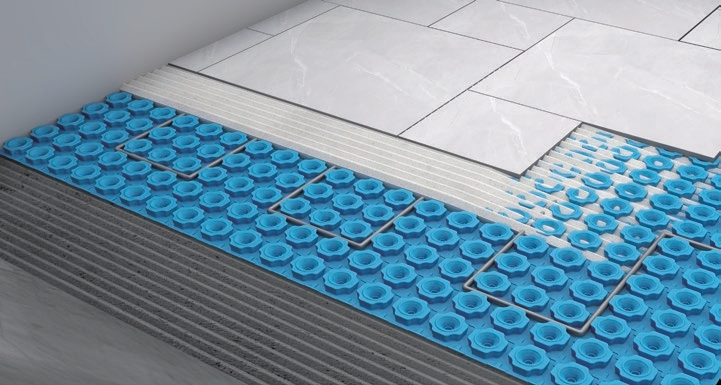
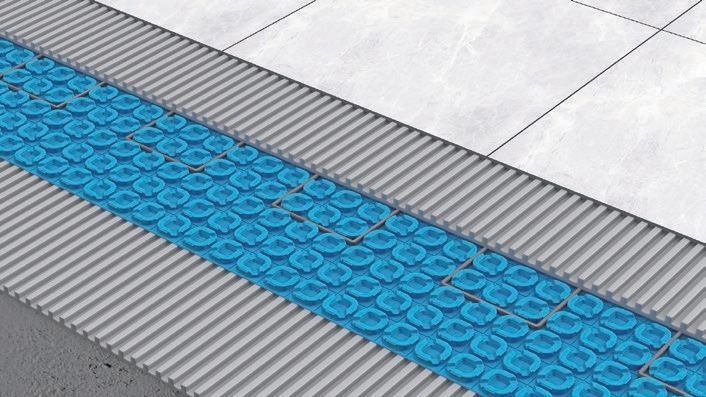
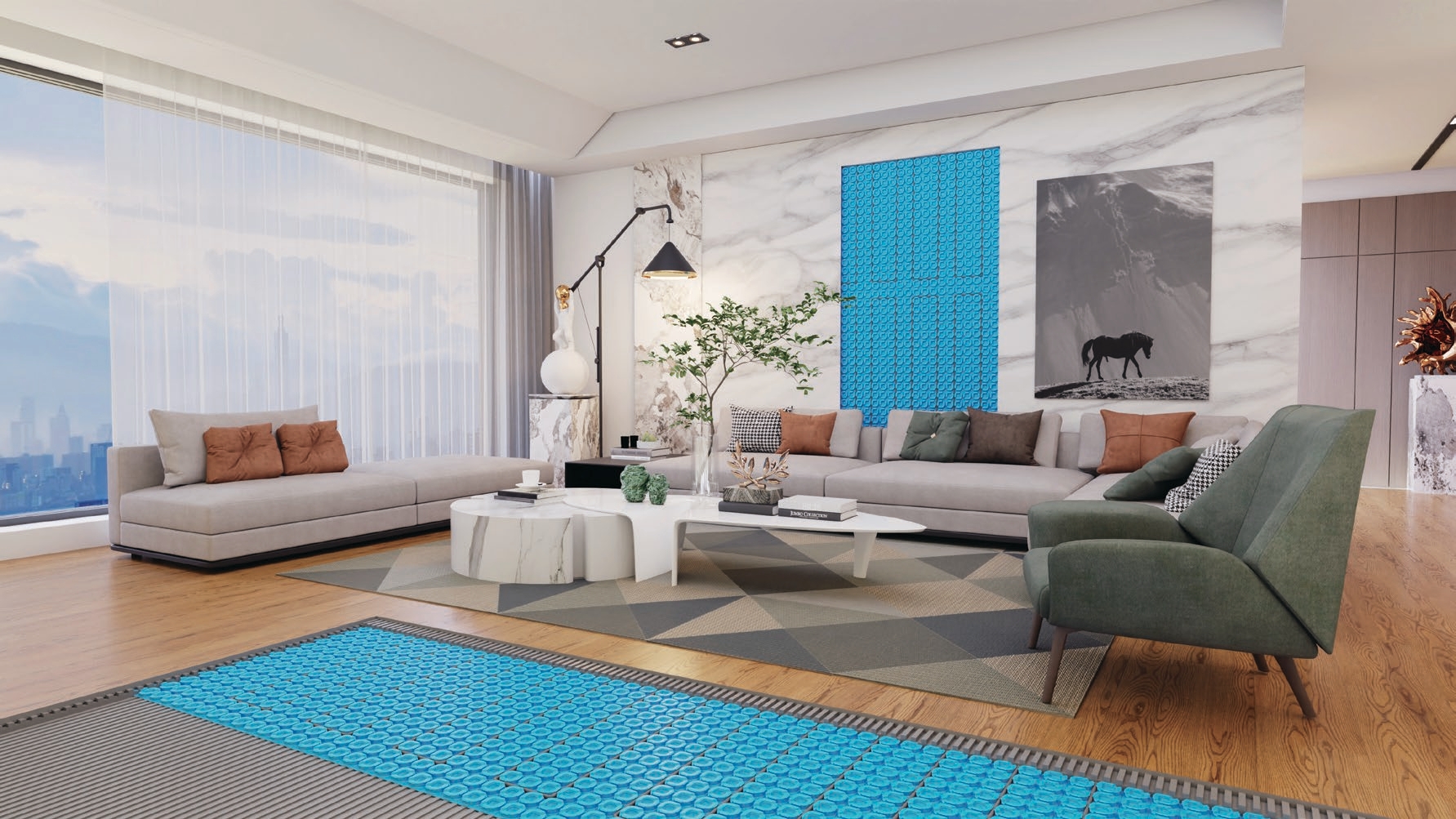
Run the decoupling mat across a radiant floor under large-format porcelain — or carry it up as a tiled feature wall. It isolates thermal movement so the heat can cycle hard without telegraphing a crack.
Where the materials go to work
A look at how the line goes together across common wet-area assemblies — from radiant floors to backer-board sheathing. Use these as a guide to where Streamline Essentials backer board, membranes, and decoupling mats fit on your next job.

Run the decoupling mat across a radiant floor under large-format porcelain — or carry it up as a tiled feature wall. It isolates thermal movement so the heat can cycle hard without telegraphing a crack.

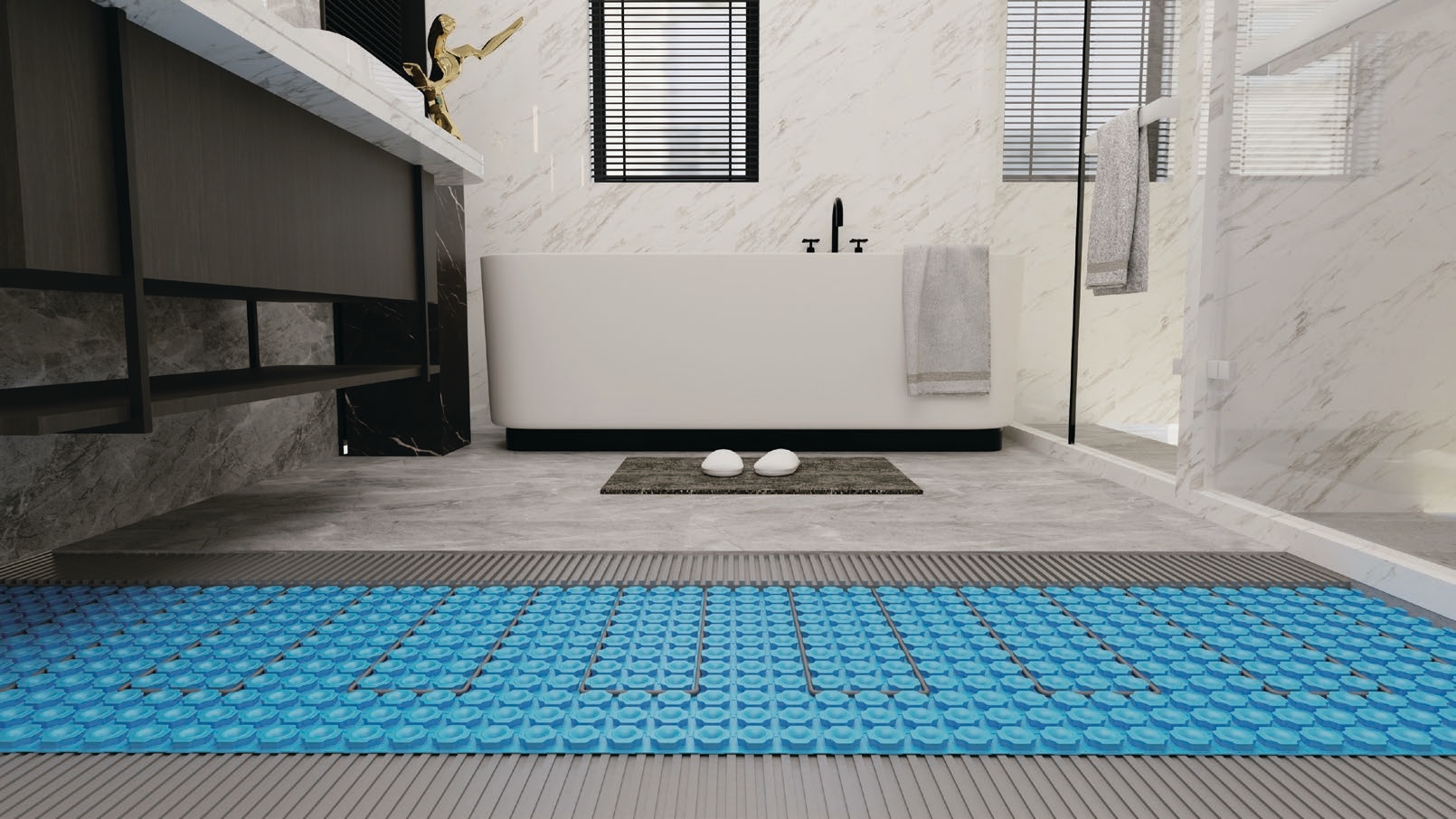
Weave radiant cable into the uncoupling mat under a marble-look porcelain floor. The waterproof mat covers both the wet-area duty and the thermal cycling — one layer, two jobs.

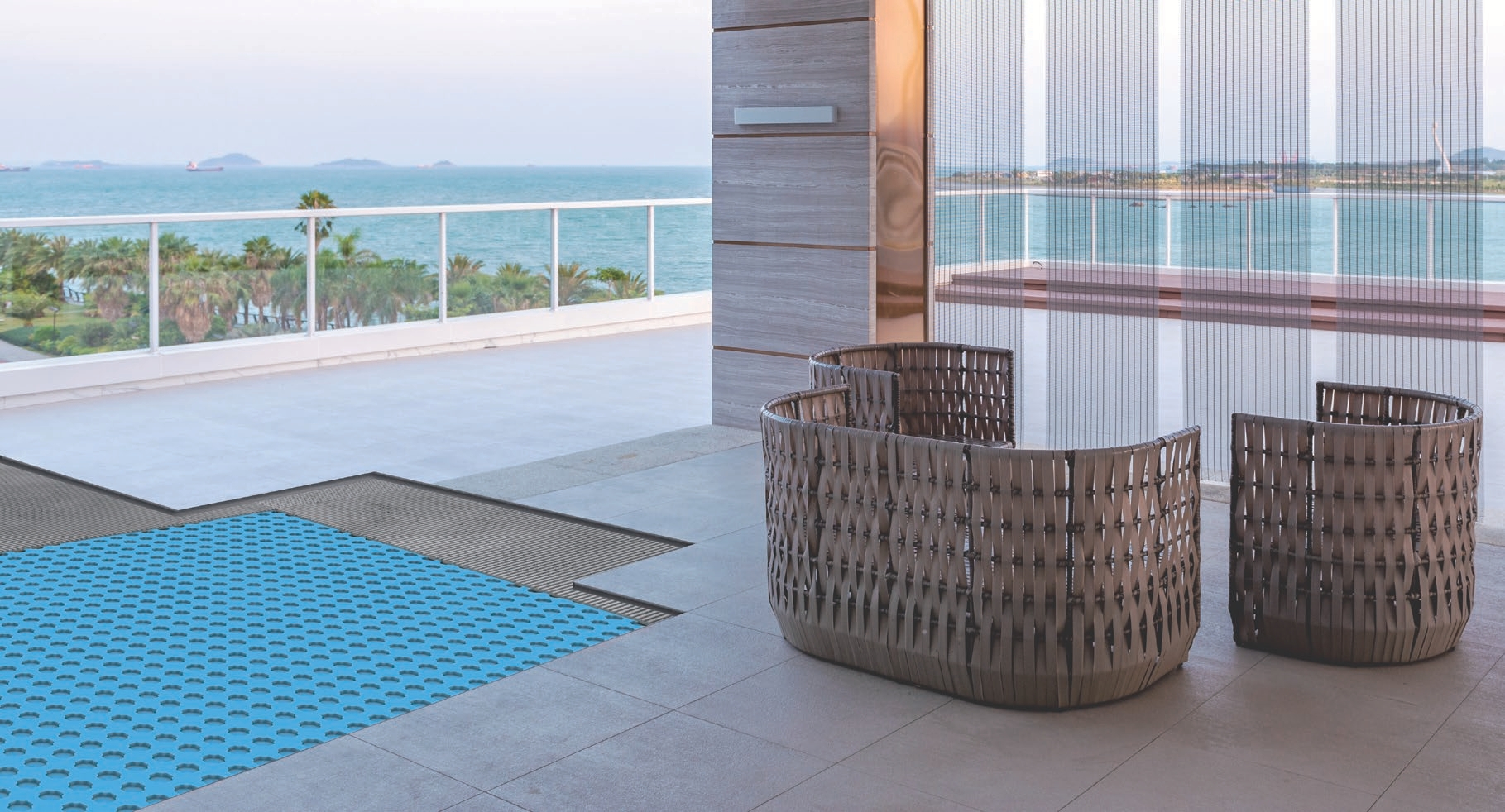
Exposed decks where freeze-thaw and standing water punish a rigid bond. The decoupling and drainage assembly lets tile float over the slab and shed water at the perimeter.

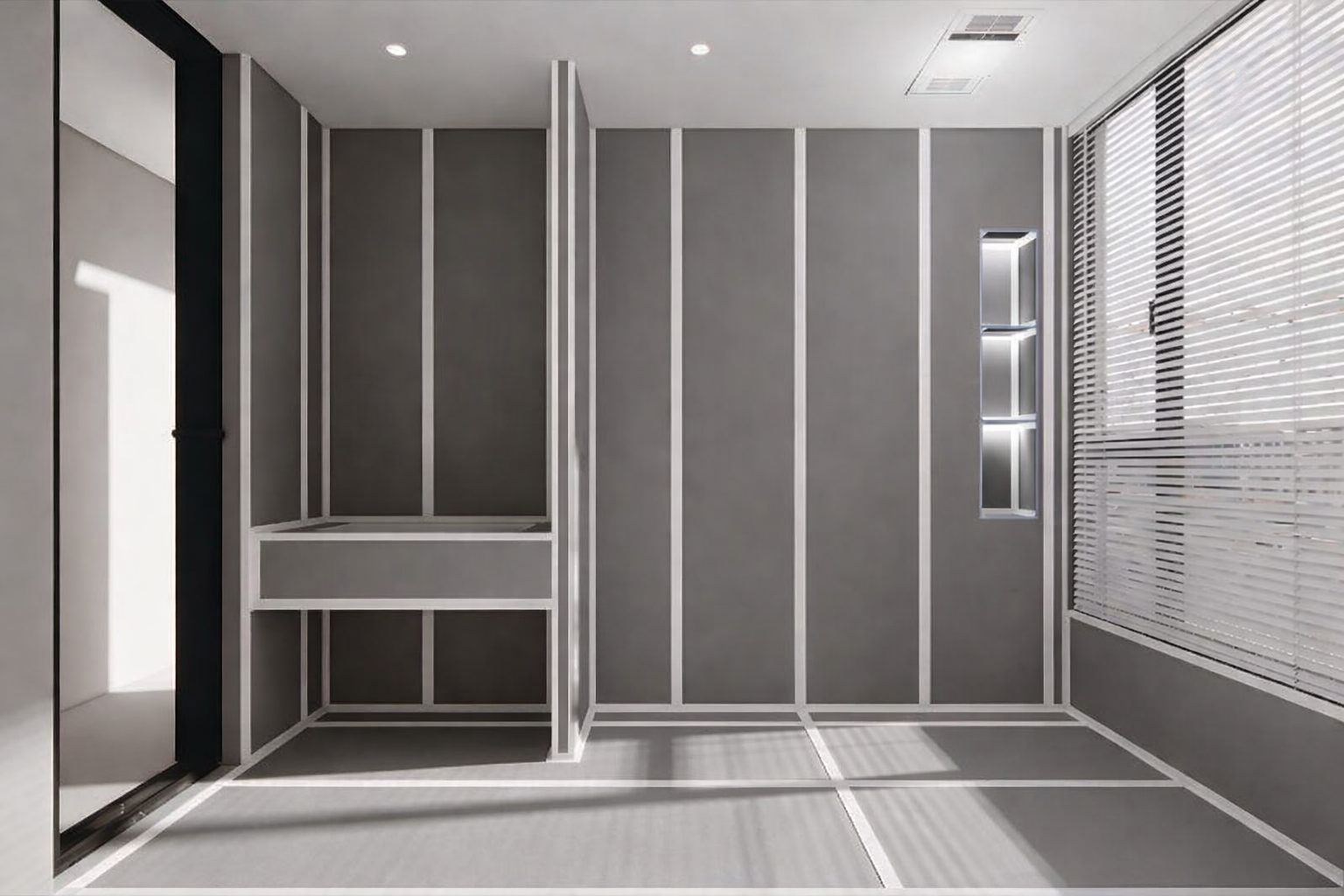
Wrap walls and floor in Essenti board with every seam taped and sealed into one continuous barrier, niches set plumb, before a single tile goes up — a textbook code-aligned substrate.

High-traffic lobbies and corridors in 24×48 porcelain over a green slab. Uncoupling absorbs early curing movement and keeps grout joints intact through the building's first season.

Repeating unit floors that benefit from a single assembly spec'd once and shipped by the pallet — predictable stock keeps a trade rotation moving floor by floor.
The track record